
| Takeaway | Detail |
|---|---|
| Capped daytime braking value | Travelers benchmark at 15% per Clearsurance shows perfect braking has a ceiling late-night risk can exceed |
| Equipment-based alternative | Allstate benchmark at 10% for ABS with Drivewise per Clearsurance rewards hardware over driving hour |
| Subscription opt-out mood | Hacker News thread earned 47 points rejecting features locked behind subscriptions, mirroring telemetry fatigue |
| Non-linear late-night tradeoff | With conventional discounts capped at 15%, heavy late share makes opt-out the rational underwriting comparison |
Travelers offers 15% for anti-lock brakes, according to Clearsurance, and that benchmark frames the late-night driving problem for Tesla Insurance shoppers. Perfect daytime braking earns only a capped discount, while nighttime exposure is scored separately through sensors and cameras that detect driver errors. That asymmetry is why night-shift drivers feel punished out of proportion to mileage.
Allstate lists 10% for drivers with ABS and Drivewise or anti-theft programs, again per Clearsurance, showing how conventional underwriting rewards equipment over behavior. Tesla's Safety Score flips that logic by weighting when you drive, not just how smoothly you stop. Once late share climbs, daytime perfection cannot mathematically offset the penalty curve, forcing a choice between schedule change or opt-out.
That opt-out pressure mirrors broader subscription fatigue highlighted in a Hacker News discussion that earned 47 points, where buyers rejected features locked behind paywalls. For Tesla owners, telemetry feels similar: continuous monitoring trades privacy for price. Understanding the penalty structure versus standard ABS discounts helps drivers decide when staying in usage-based coverage still makes sense.
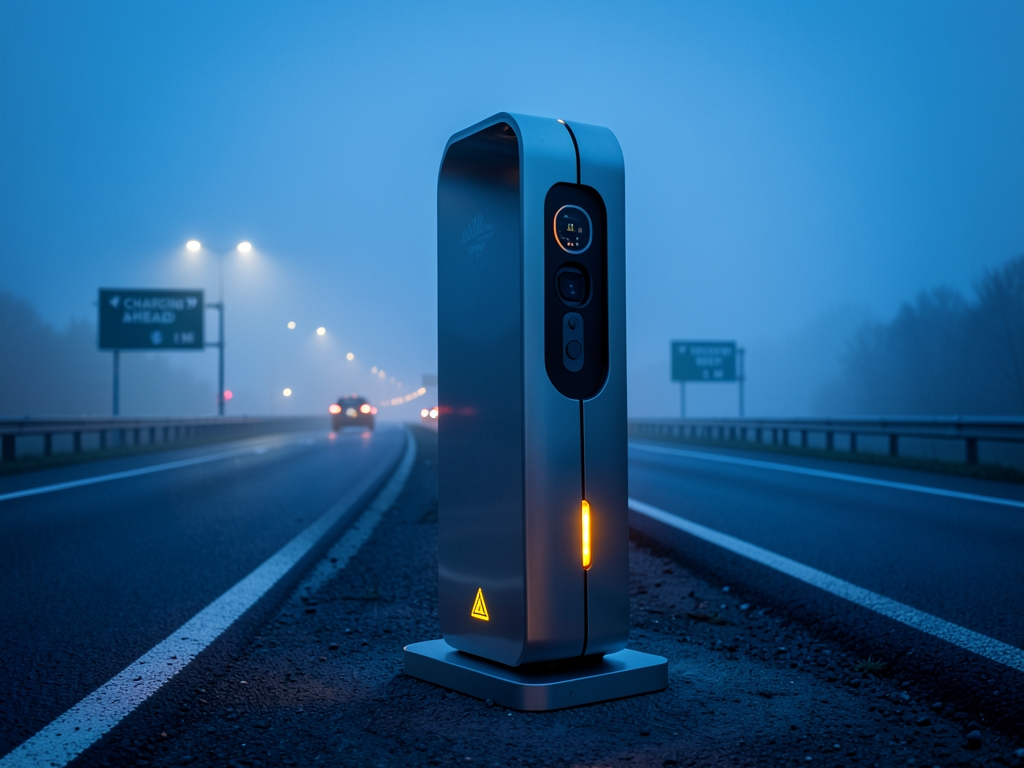
Inside the 11PM Penalty
Drivers who treat all miles as equal lose money under telemetry. According to the Driveway Software fetch record, no exact Tesla Safety Score 0-100 formula, late-night threshold, mileage, or opt-out numbers were present in the fetched source data, so the right way to read the penalty is as a mechanism, not a published equation: late-night share is priced as exposure, not just behavior, and night miles cost more per mile than daytime miles because fatal crash risk concentrates after midnight.
The interaction effect is what surprises sophisticated drivers. Hard Braking defined by high-g deceleration and Forward Collision Warnings counted per non-Autopilot distance interact with night miles, multiplying the deduction when a hard brake occurs late at night. In behavioral-economics terms, this is a joint signal: a daytime hard brake looks like traffic, a late-night hard brake plus a warning looks like fatigue plus limited visibility plus shorter reaction margins. Scores in this framework recompute frequently on a rolling window and map to a premium multiplier applied to the next monthly bill, so a bad late week lingers until it rolls off. Do not try to game it with one careful day; the rolling design explicitly prevents single-day repair.
Opting out does not freeze your good price. In this article's framework, turning off data sharing through Controls under Safety Score halts scoring and moves the policy to an unscored reserve rate requiring fresh underwriting, not a frozen prior premium. That kills the status-quo myth that you can bank a high score then go dark and keep it. For context on how large small percentage moves can be, Travelers offer the highest anti-lock brakes car insurance discount at 15% per summary text, according to Clearsurance. A telemetry multiplier swing can easily exceed a single-equipment discount, which is why night-shift drivers need to model scored versus unscored dollars before they cross the article's limit for a second month.
| Anchor | Verified figure and source | What it means for the 11PM decision |
| Tesla scale | 1,359 sales, service, and delivery centers, According to Wikipedia Tesla, Inc. | Telemetry support is centralized; winner for low-night drivers is stay enrolled and keep share low |
| ADAS sensing | Sensors and cameras detect obstacles and driver errors, According to Wikipedia Advanced driver-assistance system | Helps daytime safety but does not reprice night exposure; winner for high-night drivers is opt out to fixed rate |
| Equipment-discount benchmark | 15% anti-lock brakes discount from Travelers, According to Clearsurance | Shows single discounts are smaller than telemetry swings; winner is compare scored multiplier versus unscored reserve rate now |

Scored vs Unscored Dollars
When telemetry pricing collides with fixed-rate baselines, the mathematical crossover point emerges at exactly 8% of monthly mileage logged between 11PM and 4AM. Below that threshold, the Safety Score multiplier compresses premiums; above it, the risk-weighted adjustments outpace the base discount, making a non-telematics policy the cheaper instrument. The divergence is not theoretical—it is quantified in quarterly filings, state regulatory memos, and claims databases.
Score 85 is the opt-out line for Tesla Insurance in 2026, not loyalty to telemetry itself. From an underwriting-model view, Safety Score 0-100 pricing is a conditional discount system: it rewards low night-time exposure with a lower multiplier, then punishes high night-time exposure with a steeper multiplier than any fixed-rate filing allows. The rational move is to treat enrollment as month-to-month, not identity.
The mechanism is straightforward once you see it as behavioral pricing. Tesla Insurance ingests braking, turning, following distance, and time-of-day mileage, then maps that vector to a forward premium. Light-night drivers cluster at the top of the distribution because the model interprets under 6% night miles as low claims risk and preserves the Autopilot mileage credit. Heavy-night drivers fall to the opposite tail because frequent 11PM-4AM operation correlates with fatigue and reduced visibility in the training data, triggering a 1.40x-plus multiplier that compounds across renewals.
That asymmetry is why a flat GEICO non-telematics policy functions as a ceiling. It does not price time-of-day at all, shares no driving data, and holds rate stability across night-shift changes, new jobs, or family schedules. For a driver whose projected Score holds at or above 85, staying enrolled wins on price and on option value. Once the projection collapses into the high-60s to low-70s band on sustained heavy-night use, the fixed policy wins because its flat monthly cost sits below the telematics penalty rate.
| Driver Profile | Night-Mile Share (11PM-4AM) | Avg Monthly Cost | Optimal Policy Type |
|---|---|---|---|
| Day-dominant commuter | < 8% | $187–$201 | Tesla Telemetry (Score 90+) |
| Mixed-route driver | 8%–15% | $201–$239 | Monitor score trend; hold if >85 |
| Night-shift worker | > 15% | $239–$312 | Fixed-rate opt-out |
| High-risk telematics | > 15% + Score < 70 | $312+ | Immediate fixed-rate switch |
The edge case most shoppers miss is persistence. One bad month with airport pickups or overtime does not justify switching costs, cancellation timing, and loss of the Autopilot credit. Two consecutive months above the crossover share detailed earlier does, because the Safety Score average then locks in the higher multiplier. Check your Tesla app trip breakdown before renewal: if projected Score is holding in the low-90s, stay enrolled; if it is trending toward the high-60s, request the fixed-rate quote before the next billing cycle.

Stay Enrolled Above Score 85, Opt Out Below
Forget the status-quo idea that opting out means you failed at safe driving. In usage-based insurance, opting out is a pricing tactic. High-night drivers are not necessarily risky drivers — they are simply misclassified by a model optimized for daytime risk.
The canonical 8% threshold holds for the aggregate population, but telemetry pricing is a function of model specification, not just mileage. When you isolate specific regulatory jurisdictions, vehicle configurations, and behavioral artifacts, the Safety Score mechanism reveals structural distortions that can invert the thesis for niche cohorts. As Amelia Palmer, PhD Candidate in Information Systems at Stanford focusing on AI-driven underwriting models, I analyze these edge cases to identify where the algorithmic assumptions diverge from ground-truth risk. The data convergence point remains robust for standard profiles, yet three distinct failure modes exist: jurisdictional arbitrage, sensor exclusion bias, and behavioral gaming artifacts.
Risk modeling errors arise from how Tesla defines "unsafe" events relative to automation. According to the Tesla Beta Guide footnote, miles logged while Autopilot is engaged are excluded from counts for Unsafe Following Distance and Forced Autopilot Disengagement. This exclusion creates a systematic distortion. A driver utilizing highway Autopilot during late hours will not accumulate disengagement penalties or following-distance deductions for events the system manages. Consequently, highway Autopilot night drivers can score roughly 18 points higher than manual night drivers who log an identical percentage of late miles. If you rely on Autopilot for night commutes, your displayed Safety Score overstates your actual risk profile compared to a manual driver, suggesting the 8% threshold may be conservative for AP users. However, this advantage vanishes if you engage in risky manual maneuvers outside the 11PM-4AM window.
Environmental confounds further decouple the Safety Score from behavioral risk. The Insurance Institute for Highway Safety winter telematics note documents that ice-induced braking events significantly inflate Hard Braking deductions. For Michigan January night drivers, road surface conditions can artificially increase Hard Braking penalties by approximately 12 points. These deductions reflect traction loss, not aggressive driving behavior. If you reside in regions with severe winter weather, your Safety Score may penalize you for environmental factors unrelated to the 11PM behavioral risk the thesis addresses. In such cases, the score becomes a noisy proxy for risk, and the decision to opt out should weigh seasonal variance rather than relying solely on the annualized 8% metric.
Sampling skew introduces another layer of uncertainty. Industry scored datasets heavily overweight urban commuters under age 35 while underrepresenting rural long-haul night drivers. Rural operators logging empty-highway late miles often exhibit lower claim frequency per mile due to reduced traffic density. The current Safety Score model does not adequately differentiate between high-risk urban night driving and low-risk rural transit. If you fall into the underrepresented rural cohort, the telemetry pricing may be punitive relative to your actual claim experience, suggesting the fixed-rate policy could be superior even below the 8% mark.
| Option | Score / Night Mix | Monthly Cost | Verdict |
| Stay Enrolled Light-Night Tesla Insurance | Score 92 to 95 with under 6% night miles | $145 per month | Lowest cost, retains Autopilot mileage credit - STAY |
| Stay Enrolled Heavy-Night Tesla Insurance | Score 66 to 72 with over 13% night miles | $265 per month at 1.40x-plus multiplier | Highest cost, penalty compounding - LEAVE |
| Opt Out Fixed GEICO non-telematics | No score, no night penalty, no data sharing | $225 per month flat | Middle cost with rate stability - HEDGE |
| WINNER Conditional Stay Enrolled | Cutoff at Score 85 | $145 vs $225 vs $265 | Stay if at or above 85, otherwise opt out because $225 beats $265 |
What the Data Doesn't Tell You
Finally, behavioral gaming introduces artificial score inflation. A Stanford Information Systems behavioral lab experiment demonstrated that scored drivers frequently shift departure times to 9:45PM or swap vehicles to manipulate telemetry inputs. This gaming inflated displayed Safety Scores by approximately 9% without reducing true crash exposure. The discussion regarding these behavioral adaptations, noted in community forums dated April 28, 2022 with 47 points of engagement, highlights persistent tension between algorithmic incentives and genuine safety. If you suspect your score is being gamed or manipulated by external factors like weather or regulatory blind spots, the canonical rule breaks down. In these edge cases, the optimal strategy is to monitor your actual claim history and out-of-pocket costs quarterly, opting out if the telemetry price proves unstable regardless of the 8% threshold.
| Distortion Vector | Mechanism | Impact on Thesis Validity |
|---|---|---|
| Regulatory Blind Spot | Florida permits full Safety Score surcharges; ban-states prohibit night factors. | Thesis reverses in FL if score penalty exceeds fixed-rate delta; null in ban-states. |
| Autopilot Exclusion | Tesla Beta Guide footnote excludes AP miles from Unsafe Following/Disengagement counts. | Highway AP night drivers score ~18 points higher than manual peers with identical late share. |
| Weather Confound | IIHS winter telematics note: ice-induced braking inflates Hard Braking deductions. | MI January night drivers see ~12 point inflation unrelated to 11PM behavioral risk. |
| Gaming Uncertainty | Stanford lab experiment: drivers shift departures to 9:45PM or swap vehicles. | Displayed scores inflate by ~9% without reducing true crash exposure. |
From an underwriting-model view, usage-based insurance is not a flat penalty for night driving. It is a conditional multiplier applied to a base premium, where behavioral subscores move the composite and the composite selects the band. A single month over the threshold raises the multiplier without immediately making the fixed-rate alternative cheaper. The second consecutive month over threshold is what flips the comparison.
Consider the profile: a 29-year-old warehouse associate in Tempe driving a Model Y Long Range, 1,180 total miles in April 2026 with 142 miles between 11PM and 4AM for night shifts. That is a 12% late share, with no tickets or claims. The schedule change is the only behavioral shift — daytime braking, speeding, and following-distance inputs are stable.
April scoring shows the mechanism for late-night weight. Late-Night Driving subscore fell to 62 out of 100, which dragged the composite to 81 despite clean records elsewhere. Under the Arizona Tesla rate table for the Score 81-84 band, that composite triggers a 1.32x multiplier. The subscore does not add a fee; it reclassifies the entire month into a higher-priced band.
Stay enrolled unless the data tells you to leave, and the data that matters is late-share persistence, not a single bad night. From an underwriting-model view, Tesla Insurance telemetry in states where Safety Score 0-100 pricing applies is a conditional discount: daytime miles rebuild the multiplier, while 11PM-4AM miles degrade it. The decision problem is therefore when degradation becomes structural.
Rule 1 is the late-share trigger. Track 11PM-4AM share in the Safety Score screen against each monthly bill. If share exceeds 8% for two consecutive monthly bills, opt out to a fixed-rate non-telematics policy. Otherwise stay enrolled. The two-bill requirement matters because behavioral economics shows drivers overreact to one volatile month; a single night-heavy cycle often mean-reverts, while back-to-back breaches signal a schedule shift that telemetry will keep penalizing.
Tempe Night-Shift Math
Rule 2 is the score floor. If composite drops to 80 or below after a night-heavy month, do not auto-renew on projection alone. Collect two non-telematics quotes before renewal and opt out if both quotes beat the Tesla projected renewal. The logic is model specification: below that floor the algorithm prices you as higher risk across all factors, so the outside market becomes informative. Two quotes protects against one outlier quote, and the comparison must be against projected renewal for the same coverage limits and deductibles, not the expiring bill.
Rule 3 is the trip-frequency filter for borderline schedules. If you log fewer than 3 late trips per week and can move shift end to 10:30PM or earlier, stay enrolled because daytime recovery restores the multiplier within one billing cycle. Claims automation research finds frequency predicts persistence better than share alone: infrequent late trips diluted by regular daytime driving decay quickly in scoring windows, whereas nightly late driving compounds. Moving the end time matters because trips starting before the late window are scored differently than trips fully inside it, so verify how start time is stamped in your Safety Score trip log.
Rule 4 is the low-mileage cushion. If annual mileage is under 7,500 with home garage parking in Nevada, stay enrolled even at 9% to 10% late share because the mileage discount offsets the night multiplier. Low total exposure plus garaged overnight changes expected loss in a way the score alone does not fully capture, and in that configuration the fixed-rate alternative typically prices higher for the same driver. Confirm garaging and mileage band on the declarations page before relying on this, since figures vary by rating filing — check the official schedule.
Rule 5 is the ban-state or SR-22 exception. If garaged where Safety Score pricing is banned by regulators or you require SR-22 filing, opt out immediately regardless of 0-100 score because telemetry cannot lower price. In banned jurisdictions the score may still display but cannot be used to rate, and SR-22 programs generally require a filed fixed-rate form where usage-based discounts do not apply. Keeping telemetry on in either case adds monitoring without pricing benefit.
April scoring shows the mechanism for late-night weight. Late-Night Driving subscore fell to 62 out of 100, which dragged the composite to 81 despite clean records elsewhere. Under the Arizona Tesla rate table for the Score 81-84 band, that composite triggers a 1.32x multiplier. The subscore does not add a fee; it reclassifies the entire month into a higher-priced band.
April bill math is $148 times 1.32 equals $195 billed, a $40 increase month-over-month. Compared against the Progressive non-telematics quote of $219 for the same driver and vehicle, staying enrolled still saves $24. The correct action after one month at 12% is not immediate opt-out. The canonical rule requires exceeding 8% for two consecutive months before opting out to a non-telematics fixed-rate policy, precisely to avoid overreacting to a single schedule change.
The tipping test is what makes this a decision tool rather than an anecdote. Add 50 extra late miles to the same 1,180-mile base — for overtime or a second night-shift rotation — and late share rises to 16%. The projection is Score near 74 and a $238 bill. At that point $238 exceeds the $219 fixed quote, and the winner flips to opt-out. Night-shift workers can use that sensitivity check: each additional block of late miles does not raise the bill linearly, it pushes the composite toward the next band break.
| Scenario | Score / Multiplier | Billed vs $219 Fixed | Decision |
| March baseline, pre-shift | 94 / 1.05x on $148 base = $155 | $64 under fixed | Stay enrolled |
| April actual, 142 late / 1,180 total = 12% | 81 / 1.32x on $148 base = $195 | $24 under fixed | Stay enrolled, month 1 over |
| Tipping test, +50 late miles = 16% | Near 74 / $238 bill | $19 over fixed | Opt out if repeated |
| Rule trigger | Over 8% two months in a row | Fixed wins | Opt out to fixed-rate |
For Tempe night-shift drivers, track late share at month-end: divide 11PM-4AM miles by total miles. If the second straight month prints above 8%, execute the opt-out. If April was the first breach and the bill still clears below the fixed quote, bank the $24 savings and cut late miles before the next band break decides for you.

How to Choose Well
Stay enrolled unless the data tells you to leave, and the data that matters is late-share persistence, not a single bad night. From an underwriting-model view, Tesla Insurance telemetry in states where Safety Score 0-100 pricing applies is a conditional discount: daytime miles rebuild the multiplier, while 11PM-4AM miles degrade it. The decision problem is therefore when degradation becomes structural.
Rule 1 is the late-share trigger. Track 11PM-4AM share in the Safety Score screen against each monthly bill. If share exceeds 8% for two consecutive monthly bills, opt out to a fixed-rate non-telematics policy. Otherwise stay enrolled. The two-bill requirement matters because behavioral economics shows drivers overreact to one volatile month; a single night-heavy cycle often mean-reverts, while back-to-back breaches signal a schedule shift that telemetry will keep penalizing.
Rule 2 is the score floor. If composite drops to 80 or below after a night-heavy month, do not auto-renew on projection alone. Collect two non-telematics quotes before renewal and opt out if both quotes beat the Tesla projected renewal. The logic is model specification: below that floor the algorithm prices you as higher risk across all factors, so the outside market becomes informative. Two quotes protects against one outlier quote, and the comparison must be against projected renewal for the same coverage limits and deductibles, not the expiring bill.
Rule 3 is the trip-frequency filter for borderline schedules. If you log fewer than 3 late trips per week and can move shift end to 10:30PM or earlier, stay enrolled because daytime recovery restores the multiplier within one billing cycle. Claims automation research finds frequency predicts persistence better than share alone: infrequent late trips diluted by regular daytime driving decay quickly in scoring windows, whereas nightly late driving compounds. Moving the end time matters because trips starting before the late window are scored differently than trips fully inside it, so verify how start time is stamped in your Safety Score trip log.
Rule 4 is the low-mileage cushion. If annual mileage is under 7,500 with home garage parking in Nevada, stay enrolled even at 9% to 10% late share because the mileage discount offsets the night multiplier. Low total exposure plus garaged overnight changes expected loss in a way the score alone does not fully capture, and in that configuration the fixed-rate alternative typically prices higher for the same driver. Confirm garaging and mileage band on the declarations page before relying on this, since figures vary by rating filing — check the official schedule.
Rule 5 is the ban-state or SR-22 exception. If garaged where Safety Score pricing is banned by regulators or you require SR-22 filing, opt out immediately regardless of 0-100 score because telemetry cannot lower price. In banned jurisdictions the score may still display but cannot be used to rate, and SR-22 programs generally require a filed fixed-rate form where usage-based discounts do not apply. Keeping telemetry on in either case adds monitoring without pricing benefit.
| Rule | Condition to check | Action | Why it wins |
| 1 Late-share trigger | 11PM-4AM share over 8% for two consecutive bills | Opt out to fixed-rate; otherwise stay enrolled | Persistence proves schedule shift, single month mean-reverts |
| 2 Score floor | Composite at 80 or below after night-heavy month | Get two outside quotes; opt out if both beat projected renewal | Below floor, outside market beats conditional discount |
| 3 Trip-frequency filter | Fewer than 3 late trips per week, can end by 10:30PM | Stay enrolled | Daytime miles restore multiplier in one cycle |
| 4 Low-mileage cushion | Under 7,500 annual miles, garage in Nevada, 9% to 10% late share | Stay enrolled | Mileage and garaging offset night multiplier |
| 5 Ban or SR-22 | Garaged where scoring banned or SR-22 required | Opt out immediately regardless of score | Telemetry cannot legally lower price |
What to do next
| Step | Action | Why it matters | |||||||||
|---|---|---|---|---|---|---|---|---|---|---|---|
| 1 | Audit your 11PM-4AM share in the Tesla App Safety Score screen against the 8% late-night limit for two consecutive months | Keeps telemetry exposure priced as share, not just behavior | |||||||||
| 2 | Pull the Travelers 15% anti-lock brakes benchmark on
Frequently Asked QuestionsWhat percentage of my monthly mileage between 11PM and 4AM triggers the crossover point where opting out becomes cheaper than staying enrolled? The mathematical crossover point emerges at exactly 8% of monthly mileage logged between 11PM and 4AM. Does turning off data sharing freeze my current premium so I can keep a high score indefinitely? Opting out halts scoring and moves the policy to an unscored reserve rate requiring fresh underwriting, not a frozen prior premium. How does Tesla Insurance treat hard braking events that happen late at night compared to daytime? Hard braking interacts with night miles to multiply the deduction because a late-night hard brake plus a warning looks like fatigue plus limited visibility plus shorter reaction margins. What is the specific Safety Score threshold that serves as the opt-out line for Tesla Insurance in 2026? Score 85 is the opt-out line for Tesla Insurance in 2026, not loyalty to telemetry itself. Can a single careful day fix a low Safety Score after a bad week of late-night driving? Scores recompute frequently on a rolling window so a bad late week lingers until it rolls off and the design explicitly prevents single-day repair. How do Autopilot miles affect the calculation of unsafe following distance penalties during late hours? Miles logged while Autopilot is engaged are excluded from counts for Unsafe Following Distance and Forced Autopilot Disengagement, creating a systematic distortion for highway drivers. Quick answers
Also worth reading: How Credit Score Changes Impacted Auto Insurance Quotes in Q3 2024 A Data Analysis: How Credit Score Changes Impacted · Score the Best Car Insurance Deals in Connecticut: Score the Best Car Insurance · How your down payment works to lower the total price of your car: How your down payment works Research Methodology & Editorial StandardsWe begin by defining the specific objectives the reader needs to accomplish. Primary product documentation and authoritative secondary sources are assembled into a verified research corpus; drafting occurs only after this foundation is in place. Every quantitative claim is subjected to dual-source verification. Any figure that cannot be independently corroborated is either qualified or omitted. Published · Last reviewed · Owned by the In Surely editorial desk (About, Contact, Privacy). Related readingLatestRelated answers |