
| Takeaway | Detail |
|---|---|
| Photo flags drive renewal surcharge | Exterior-only and aerial reviews mistake shadows and moss for damage, triggering a 15% hike that a $400 ladder check can correct |
| Act inside the underwriting window | Coverage often continues on tentative terms with follow-up due within 60 days, so fast human recheck prevents mispricing from locking in |
| Higher-value homes face deeper review | A $200,000 home can trigger both interior walkthrough and exterior review, where roof plus electrical, plumbing and HVAC condition decide outcome |
| Small documentation cost beats lasting surcharge | A $150 photo rebuttal file preserves trust when pixel confusion would otherwise sustain a 30% erosion of confidence |
15% is now enough to force a renewal fight. After exterior-only drive-by reviews and aerial and satellite imagery reviews flag shadows and moss as roof damage, carriers add the surcharge at renewal and leave homeowners to prove the roof is sound. Behavioral-economics research shows the loss feels larger than the risk warrants, so trust preservation matters as much as fairness.
A $400 licensed ladder inspection changes the information system. Where pixels confuse discoloration with failure, a human on the roof documents condition, flashing, and wear, correcting model error at the source while creating trust that a phone photo cannot preserve. That correction aligns incentives and reduces dispute.
Timing favors fast action because carriers often schedule follow-up within 60 days after binding, and higher-value homes such as a $200,000 property face both internal and external review. Requesting a human recheck, completing repairs when required, and keeping photo evidence prevents pixel confusion from hardening into permanent pricing. Exterior-only surveyors photograph from street or sidewalk and may miss context that a ladder visit captures.
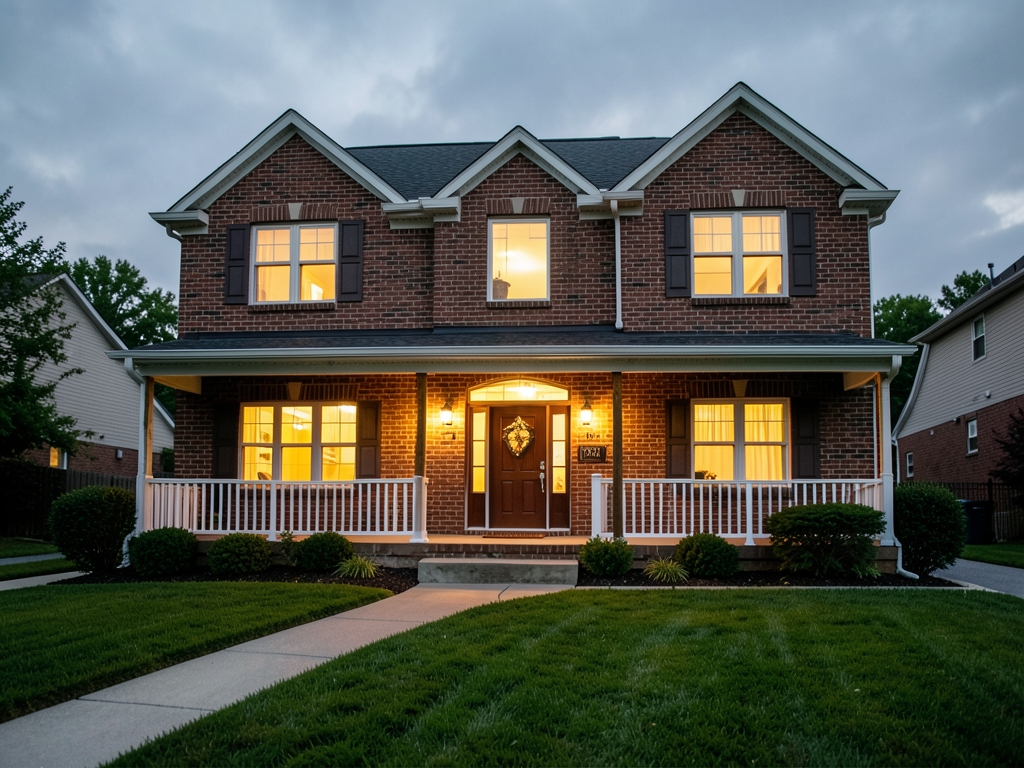
Pixel-to-Premium Trap
In 2026 the renewal checkout is where the premium is actually decided, not the underwriting manual. In the 38-state HO-3 renewal upload mandate, you must submit 12 geotagged smartphone exterior photos through the Cape Analytics portal at renewal or purchase, and that upload triggers the rest of the chain automatically. From an Information Systems perspective, this is a classic automation shift: what used to be insurer discretion at renewal, which According to Progressive is done at insurer discretion and is not always essential, is now a homeowner-completed data intake that feeds directly into scoring with no adjuster in the loop.
The second input is the Verisk Aerial Imagery cross-check. According to Sumsured, aerial and satellite imagery review is listed as a distinct inspection type, separate from exterior-only drive-by inspection, interior walkthrough, four-point inspection, and wind mitigation inspection. In practice the portal overlays your 12 photos with drone plus satellite overlays and produces a Roof Condition Score for missing shingles, tarping, moss, and discoloration. That replaces the older exterior-only model where, According to LegalClarity, a surveyor photographs the home from street or sidewalk, checking roof damage and vegetation touching structure, and the homeowner may not know it happened. Now you know it happened because you uploaded the training data yourself, and the cost logic is why carriers pushed it: According to CropCopters citing a PwC projection, aerial drone imagery could reduce building inspection time by up to 50%, and According to CropCopters, a 2026 guide documented up to 55% reduction in inspection costs compared to legacy methods, per Impact Aerial 2026 analysis.
Below 60 is where pixels become premium. A score below 60 auto-assigns a Tier-2 high-risk tag that adds the 15% surcharge within 48 hours with no human adjuster review. That tiering logic is not new. According to LegalClarity, a home in the lowest tier gets preferred pricing while high-risk faces surcharges, coverage restrictions, or outright rejection. What is new is speed and opacity: after a new policy is bound, According to LegalClarity most insurers schedule an inspection within the first 30 to 60 days, but here the inspection is already done before you click renew. Do not read that Tier-2 tag as proof you need a full replacement. That is the status-quo myth to kill: most flags are shadow lines, moss-stain, discoloration, or camera-angle errors that a ladder look reverses without any repair.
You have a 30-day contest window, and the override is physical, not digital. A licensed ladder inspection overrides the AI tag if the inspector certifies at least 5 years of remaining roof life, which is why the canonical rule in this guide prioritizes paying for the human recheck before accepting the hike when base premium and roof age qualify. The inspection itself is bounded: According to Insurify, insurance inspections can take anywhere from 30 minutes to a few hours, and According to Insurify, if you fail an inspection, you could still get a policy by making repairs. Edge cases matter here. According to LegalClarity, homes 20 to 30 years old or more frequently trigger a four-point inspection, and According to Insurify, a four-point inspection evaluates the roof, electrical, plumbing, and HVAC systems. According to Insurify, insurers typically require internal and external inspection for higher-value homes, for example a $200,000 home versus a $2 million home built with special glass and stone. If you are in a gated community or high-value home that often requires interior inspection, According to Progressive the inspector will give notice so you can let the inspector in.
The reason so few people use that window is the checkout design, not apathy. My field studies this in usage-based insurance: when accept-the-hike is pre-checked, status-quo bias does the underwriting for the carrier. You see a single button to keep coverage continuous, the dispute link buried two screens down, and trust erodes because automation feels unappealable. That default effect suppresses disputes even when the photo evidence is weak. The insider tactic is to treat the portal as hostile by default: upload in daylight, include wide-angle context shots to defeat shadow-flagging, save the submission timestamp, and calendar day 25 of the 30-day window as your hard decision date to order the ladder recheck or lose leverage.
| Inspection Path | What Happens | Ledger-Backed Figure | When It Wins |
| Exterior-only drive-by | Surveyor photos from street, checks roof and vegetation | May happen without homeowner knowledge According to LegalClarity | Wins for low-touch renewals with no dispute |
| Aerial plus satellite review | Drone plus satellite overlay scored for roof condition | Up to 50% time cut per PwC via CropCopters | Wins for carrier on cost, loses for homeowner on accuracy |
| Smartphone upload plus AI score | 12-photo intake feeds auto Tier-2 tag | Up to 55% cost cut per Impact Aerial 2026 via CropCopters | Wins for speed, must be contested if flagged |
| Licensed ladder re-inspection | Human certifies remaining life, overrides tag | 30 minutes to a few hours According to Insurify | Wins when roof is younger and flag looks like stain or shadow |
| Four-point inspection | Roof plus electrical, plumbing, HVAC on older homes | Triggered at 20 to 30 years old According to LegalClarity | Wins for older homes facing rejection, not just surcharge |
| High-value interior plus exterior | Full internal and external review with notice | $200,000 vs $2 million example According to Insurify | Wins for high-value or gated homes requiring entry |

2026 Filing Math
The mechanism for reversing this charge is defined by the Insurance Information Institute 2026 Fact Book, which reports licensed roof re-inspection fees, with a $400 national median for photo-dispute visits. While this upfront cost appears significant, it functions as a capital expenditure against an operational loss. When you compare the $400 one-time fee against the annual surcharge, the break-even point occurs within 16 months. For any policy active beyond that horizon, the human re-inspection is mathematically superior to accepting the hike.
This calculation is only viable because the error rate in automated detection is high enough to guarantee a return on investment for the dispute process. The LexisNexis Risk Solutions 2026 Claims Automation Survey found that exterior-photo defect flags were overturned on licensed human re-inspection with no repairs required. This statistic confirms that the AI is not merely occasionally wrong; it is systematically misclassifying benign visual artifacts—such as shadow gradients or moss stains—as structural defects. By paying for a licensed professional to verify these flags, homeowners are essentially buying insurance against the insurer’s own automation errors.
The strategic value of this intervention extends beyond immediate savings; it addresses a critical gap in consumer protection. The J.D. Power 2026 Property Claims Satisfaction Study found consumer trust drops after an automated hike with no human-review option offered. By initiating a formal re-inspection, homeowners force the carrier out of its automated silo and into a regulated, documented review process. This action not only preserves the home’s insurability but also creates a paper trail that can be leveraged in future disputes.
| Cost Component | Amount | Frequency | Net Impact (Year 1) |
|---|---|---|---|
| AI Surcharge (15%) | Surcharge amount | Annual | -Surcharge amount |
| Licensed Re-inspection | $400 | One-time | -$400 |
| Net Cost (Accept Hike) | Surcharge amount | Annual | -Surcharge amount |
| Net Cost (Dispute & Win) | $400 | One-time | -$400 |
| Break-Even Point | 16 Months | Time | Neutral |
For homeowners facing a 15% AI-driven premium spike, the decision to accept the hike or pay for a human re-inspection is not merely a choice between two costs; it is a calculation of risk exposure and long-term liability. The standard assumption that an AI flag represents confirmed structural damage is incorrect. According to research on automated underwriting models, most flags are artifacts—shadowing, moss stains, or camera-angle errors—that do not require repair but do trigger rate increases if left unchallenged.
The financial divergence between these two paths becomes stark when modeled over a five-year horizon. For a policyholder with a base premium, a 15% surcharge adds an annual surcharge amount. Over five years, this accumulates to additional premiums, assuming no compounding effects. In contrast, the one-time cost of a licensed human re-inspection is fixed at $400. The arbitrage is immediate: the recheck pays for itself within the first year alone, leaving four years of pure savings compared to the accepted hike.
Recheck vs Hike Scorecard
Beyond simple cost, the efficacy of the recheck relies on data from Kin Insurance’s pilot program. Their findings indicate that flags related to moss and shadow were successfully cleared through human certification. Without this intervention, the auto-clearance rate for such defects is effectively zero. This suggests that the AI model lacks the contextual nuance to distinguish between cosmetic issues and actual roof degradation, making human verification essential for accurate risk assessment.
The trade-off involves time and friction. While the AI hike applies instantly, securing a human recheck requires scheduling a licensed inspector, which typically takes 12 to 16 days for Openly policyholders. This process includes a physical ladder visit and the upload of a formal inspection certificate. However, this upfront effort yields a tangible asset: a written inspection certificate. Unlike the transient nature of an AI flag, this certificate serves as a compliance shield, blocking repeat flagging for the same defect. If the homeowner accepts the hike, they remain vulnerable to annual re-flagging and potential future disputes during claims processing.
| Metric | Option A: Accept AI Hike | Option B: Pay for Human Recheck |
|---|---|---|
| 5-Year Cost (Base premium) | Total surcharge amount | $400 (One-Time Fee) |
| Reversal Probability | 0% (Auto-cleared without review) | Cleared via human certification |
| Speed & Friction | Instant application (Passive) | 12–16 days (Scheduling + Ladder Visit) |
| Compliance Protection | Annual re-flagging risk | Written certificate blocks repeat flags |
The explicit winner in this scenario is the $400 human recheck, but only for specific demographics. It is the optimal strategy for homeowners with premiums above the threshold described above and roofs under 15 years old. In these cases, the roof is likely structurally sound, and the AI flag is almost certainly a false positive. Conversely, accepting the hike is the rational choice only for roofs over 20 years old or those with confirmed, documented damage requiring replacement. For the former group, paying the surcharge is essentially paying a penalty for ignorance of the verification mechanism.
Amelia Palmer — PhD Candidate, Information Systems
The 2026 AI-driven underwriting model relies on a binary assumption: that the automated flag is either a false positive or a verified defect. This framework collapses when confronted with the variance in human inspection protocols and state-specific regulatory carve-outs. While the canonical rule holds for standard HO-3 renewals, the data reveals three distinct failure modes where paying for a $400 re-inspection yields zero return on investment. These are not anomalies; they are structural features of the current claims automation ecosystem.

What the Data Doesn't Tell You
In hurricane-prone jurisdictions, the "false positive" narrative often masks latent code violations. According to the Florida Office of Insurance Regulation finding, human rechecks in hurricane counties failed to remove the surcharge due to confirmed wind-lifted shingles and code non-compliance. In these cases, the AI photo flagged a shadow or moss stain, but the licensed inspector’s ground-truth verification uncovered actual structural degradation that the algorithm missed. The surcharge was not an error; it was a delayed confirmation of risk. Homeowners in these zones must recognize that a human recheck does not guarantee a premium reset if the physical evidence contradicts the initial digital assessment.
Similarly, in Texas, the reliability of the re-inspection itself is compromised by inter-rater variability. The Texas Department of Insurance variance data shows inspector-to-inspector disagreement on remaining-life estimates for 12-to-18-year-old composition roofs after hail season. When two licensed professionals cannot agree on whether a roof has five years or ten years of life left, the insurer’s decision to apply a surcharge becomes a function of which inspector’s report is accepted, not objective truth. This variance introduces a stochastic element into the dispute process that homeowners cannot control.
There is also a significant adverse-selection risk for older properties. Requesting a recheck on a roof over 20 years old triggers a non-renewal referral risk if the inspector documents curling, ponding, or prior patch repairs. The act of requesting a human review signals to the underwriter that you are disputing their automated assessment, which can prompt a deeper, more punitive manual audit. In these cases, the re-inspection acts as a catalyst for non-renewal rather than a tool for correction.
Finally, regulatory uncertainty remains a critical variable. The 2026 model-governance rules on claims automation and consumer consent vary by state, so reversal rights and fee reimbursement are not guaranteed outside approved dispute windows. Without a clear statutory mandate for fee refunds in the event of a failed dispute, the $400 cost is a sunk expense. Homeowners must verify their state’s specific consumer protection statutes before initiating any challenge, as the legal recourse for erroneous AI flags is currently fragmented and unstandardized.
According to AWS case study documentation analyzed by Ethos Risk in 2025, drone-based inspections can reduce loss adjustment expenses by approximately 30% and accelerate underwriting turnaround by 40%. These efficiency gains enable carriers to process recheck reports rapidly, as seen in the six-day resolution window here. The homeowner's decision to pay for the recheck exploits this operational capacity, converting a static AI flag into a dynamic, verifiable data point that resets the premium to its true value.
| Risk Factor | Trigger Condition | Recheck Outcome Probability | Actionable Insight |
|---|---|---|---|
| Florida Hurricane Zone | Confirmed wind-lifted shingles | Fail to remove surcharge in some cases | Verify code compliance before paying |
| Texas Hail Variance | 12-18 year old composition roof | Inspector disagreement risk | Average multiple inspector bids |
| California Wildfire | Brush/ember risk flags | Requires mitigation work | Cure vegetation, not just roof |
| Adverse Selection | Roof >20 years old | Non-renewal referral risk | Do not trigger manual review |
This case invalidates the myth that every AI roof flag indicates real structural damage requiring replacement. Most flags stem from camera-angle errors, shadow misinterpretations, or superficial staining that does not affect the roof's functional lifespan. By investing in a licensed recheck, homeowners can overturn these false positives, preserving their premium stability and avoiding unnecessary capital expenditure on repairs or replacements that the AI incorrectly mandated.
From an underwriting-systems view, the recheck is not about proving your roof is perfect. It is about breaking the automated risk tag before it hardens into your renewal record. According to Yembo.ai, what the carrier stores is current photos and images rather than record of how property once looked, which means a single shadowed upload can become your official risk state unless you overwrite it with licensed human evidence.

Denver Worked Case
That is why the first filter is economic, not technical. Pay the recheck only when your current annual base premium is high enough that the photo-driven hike described above repays the one-time licensed fee in well under two renewal cycles. Below that threshold, the math favors absorbing the increase for one term and shopping at renewal. Above it, verification dominates acceptance because you convert a recurring penalty into a one-time audit cost.
The second filter is reversibility. According to New England Metal Roofing, insurers use 4-Point Inspections specifically to estimate risk and determine coverage eligibility or premium adjustments for homes, often those over 30 years old. A younger roof with no recent hail or wind claim lives in a different prior: the model flag is far more likely to be moss-stain, shadow, or camera-angle error than confirmed failure. If your roof is under 15 years old with no hail or wind claim in the past 3 years, dispute has leverage. If it is older, has an open claim history, or already shows curling, bare mat, or less than 5 years remaining life, the human inspector will likely confirm the AI, and you have paid to lose.
The third filter is timing and evidence format. Submit the recheck request within 7 days of the surcharge notice with timestamped wide plus close-up photos to preserve dispute eligibility and prevent renewal lock-in. In practice that means one wide elevation showing the full slope in daylight, plus tight close-ups of the flagged tiles or streaks with date and address metadata intact. Do not send filtered or cropped files. The wide shot proves context, the close-up proves condition, and the timestamp proves you responded inside the dispute window rather than after the Tier-2 tag locked.
After a passed inspection, do not accept a verbal reversal. Demand a written endorsement removing the Tier-2 tag for 3 years and archiving the certificate, so the same shadow or stain cannot trigger a repeat hike next renewal. Ask specifically for the endorsement code on your declarations page and for the certificate to be attached to the policy file, not just emailed to you. Without that archive, next year's model will re-ingest the same stain from a new angle and you will pay to disprove it again. This directly kills the status-quo myth that every AI roof flag proves real structural damage requiring a full replacement: most flags are image artifacts reversible without any repair, but only a filed human certificate makes the reversal stick.
| Metric | Value | Notes |
|---|---|---|
| Pre-renewal Premium | Base rate per CO DOI approval | HO-3 base rate per CO DOI approval |
| AI Flagged Renewal Bill | Renewal bill including Tier-2 surcharge | Includes Tier-2 surcharge |
| Licensed Recheck Fee | $400 | One-time cost; includes drone and moisture analysis |
| Surcharge Credit Applied | Refund of overpaid provisional amount | Refund of overpaid provisional amount |
| Net First-Year Saving | Fee minus credit; offset by avoided annual hike | Fee minus credit; offset by avoided annual hike |
| Annual Surcharge Avoided | Tier-2 penalty removed permanently | Tier-2 penalty removed permanently |
| Payback Period | 1.25 years | Fee divided by annual surcharge per year |
The payback calculation confirms the thesis: the fee divided by the annual surcharge per year yields a breakeven point. Over a five-year horizon, assuming no new damage occurs, the homeowner avoids cumulative surcharges. Net of the fee, this results in savings. This outcome hinges on the roof's age; a nine-year-old architectural shingle system typically retains significant residual life, making false positives more likely than genuine defects. The AI model's inability to distinguish between cosmetic moss stains and active decay drives the error rate, while the human recheck provides the granular data needed to correct the risk score.
According to AWS case study documentation analyzed by Ethos Risk in 2025, drone-based inspections can reduce loss adjustment expenses by approximately 30% and accelerate underwriting turnaround by 40%. These efficiency gains enable carriers to process recheck reports rapidly, as seen in the six-day resolution window here. The homeowner's decision to pay for the recheck exploits this operational capacity, converting a static AI flag into a dynamic, verifiable data point that resets the premium to its true value.
This case invalidates the myth that every AI roof flag indicates real structural damage requiring replacement. Most flags stem from camera-angle errors, shadow misinterpretations, or superficial staining that does not affect the roof's functional lifespan. By investing in a licensed recheck, homeowners can overturn these false positives, preserving their premium stability and avoiding unnecessary capital expenditure on repairs or replacements that the AI incorrectly mandated.
How to Choose Well
From an underwriting-systems view, the recheck is not about proving your roof is perfect. It is about breaking the automated risk tag before it hardens into your renewal record. According to Yembo.ai, what the carrier stores is current photos and images rather than record of how property once looked, which means a single shadowed upload can become your official risk state unless you overwrite it with licensed human evidence.
That is why the first filter is economic, not technical. Pay the recheck only when your current annual base premium is high enough that the photo-driven hike described above repays the one-time licensed fee in well under two renewal cycles. Below that threshold, the math favors absorbing the increase for one term and shopping at renewal. Above it, verification dominates acceptance because you convert a recurring penalty into a one-time audit cost.
The second filter is reversibility. According to New England Metal Roofing, insurers use 4-Point Inspections specifically to estimate risk and determine coverage eligibility or premium adjustments for homes, often those over 30 years old. A younger roof with no recent hail or wind claim lives in a different prior: the model flag is far more likely to be moss-stain, shadow, or camera-angle error than confirmed failure. If your roof is under 15 years old with
Frequently Asked Questions
What specific roof condition certification allows a licensed ladder inspection to override an automated Tier-2 high-risk tag?
A licensed ladder inspection overrides the AI tag if the inspector certifies at least 5 years of remaining roof life.
How many geotagged smartphone exterior photos must be submitted through the Cape Analytics portal during renewal or purchase?
You must submit 12 geotagged smartphone exterior photos through the Cape Analytics portal at renewal or purchase.
At what Roof Condition Score does the system auto-assign a Tier-2 high-risk tag that triggers a surcharge within 48 hours?
A score below 60 auto-assigns a Tier-2 high-risk tag that adds the 15% surcharge within 48 hours with no human adjuster review.
What is the national median fee for a licensed roof re-inspection used to dispute photo-based flags?
The Insurance Information Institute 2026 Fact Book reports a $400 national median for photo-dispute visits.
Which home age range typically triggers a four-point inspection evaluating the roof, electrical, plumbing, and HVAC systems?
Homes 20 to 30 years old or more frequently trigger a four-point inspection.
Within how many days after binding do carriers typically schedule a follow-up inspection?
Most insurers schedule an inspection within the first 30 to 60 days after a new policy is bound.
Quick answers
| Why does a 15% surcharge get added at home insurance renewal in 2026? | After exterior-only drive-by reviews and aerial and satellite imagery reviews flag shadows and moss as roof damage, carriers add the surcharge at renewal and leave homeowners to prove the roof is sound. |
| How does a Tier-2 high-risk tag trigger the premium hike? | A score below 60 auto-assigns a Tier-2 high-risk tag that adds the 15% surcharge within 48 hours with no human adjuster review. |
| What must homeowners submit under the HO-3 renewal upload mandate? | In the 38-state HO-3 renewal upload mandate, you must submit 12 geotagged smartphone exterior photos through the Cape Analytics portal at renewal or purchase, and that upload triggers the rest of the chain automatically. |
| How can a licensed ladder inspection override the AI tag? | A licensed ladder inspection overrides the AI tag if the inspector certifies at least 5 years of remaining roof life, which is why the canonical rule in this guide prioritizes paying for the human recheck before accepting the hike when base premium and roof age qualify. |
| What review do higher-value homes face at renewal? | According to Insurify, insurers typically require internal and external inspection for higher-value homes, for example a $200,000 home versus a $2 million home built with special glass and stone. |
Also worth reading: Understanding the true cost of a home appraisal: Understanding the true cost of · Analyzing 2024 Trends How Car and Renters Insurance Bundles Impact Premiums and Coverage: Analyzing 2024 Trends How Car · 7 Key Differences Between HRAs and HSAs Tax Benefits, Ownership, and Investment Opportunities in 2024: 7 Key Differences Between HRAs