
```html
| Takeaway | Detail |
|---|---|
| Explainable speed beats black-box review | 24 hours payout with audit trail feels fairer than 10 days of waiting without status |
| RegTech scale funds automation | $83.8 billion market growing at 18% enables real-time rule ingestion via APIs |
| Compliance learning improves accuracy | Market projected from $14.69 billion to $115.5 billion as machine learning learns from past compliance data |
| Growth demands correct automation | 20.6% CAGR with 80% attention shows automation done correctly reduces risk, done poorly multiplies liability |
$83.8 billion in RegTech spending, growing at 18%, signals why insurers can now pay in 24 hours instead of 10 days. Allied Market Research data frames speed as infrastructure, not shortcuts, built on automated rule ingestion and continuous monitoring for regulated automation.
The difference is observability. Classic checks ask if the service is up, if latency is acceptable, and if errors exist, while regulators demand to trace what threshold was active on a specific date. That audit trail replaces traditional compliance based on manual reviews, spreadsheets, and periodic audits with verifiable, explainable decisions for every claim file.
When rule ingestion via APIs turns processes that took weeks into real-time operations, and machine learning improves accuracy from past compliance data, a 24 hours payout with a clear reason feels fairer than 10 days of silence for policyholders waiting on fault and damage calls. Automation done correctly reduces risk; done poorly it becomes a liability multiplier.
Inside the 24-Hour Machine
Straight-through payment is not one model making one decision. It is five gates in series, and a clean low-complexity claim only gets paid in 24 hours when it passes all five without an injury code, a liability mismatch, or a fraud hold. Anything that trips a gate routes to human review by design, which is why the system earns trust on glass-only and bumper-only losses while preserving manual review for high-severity injury or fraud-flagged cases.
Gate one is visual evidence. At first notice of loss the Tractable AI visual appraisal ingests 6-8 smartphone photos and returns parts-and-labor damage line items with a confidence score. When confidence exceeds 92% with no injury coded, the estimate auto-approves for straight-through payment. Below that threshold, or when photos are incomplete, blurred, or show multi-panel deformation, the claim cannot stay on the 24-hour rail. From an information-systems view, that confidence threshold is the audit artifact: according to the Chudovo review discussion, a regulator reviewing the system needs to trace what threshold was active on a specific date, so carriers must version and log the 92% rule rather than silently retune it.
Gate two is independent verification of what happened. Progressive Snapshot usage-based telematics pulls the prior 30-day speed, hard-brake and GPS trace to verify crash time and location within a 20-minute window. When the trace matches the FNOL timestamp, liability clears without adjuster interviews. When it does not match — phone-reported midnight parking-lot hit with a 2:40 p.m. hard-brake event ten miles away, for example — the default to 24-hour straight-through payout no longer applies and the file demands human review for disputed liability. That separation is the core of the canonical rule: automate the evidence-complete, interrogate the inconsistent.
Gate three is the fraud graph. Shift Technology fraud graph scores every claim 0-1000 for anomaly in under 4 seconds against a 200-million-claim network, holding any score above 750 for SIU review and releasing scores below 350 directly to the 24-hour ACH payout rail. Scores in between get structured adjuster review, not auto-denial. According to the Medium analysis When Automation Becomes a Liability Multiplier published 2026-02-09, automation done correctly can reduce risk while done poorly it does the opposite, which is exactly what this triage does: it avoids both auto-paying a ring and auto-denying a good customer on a weak signal.
Gate four is the regulatory clock. California Fair Claims Settlement Practices Regulation 2695.7 imposes a 40-day accept-or-deny deadline after proof of loss, which carriers beat with an internal 24-hour straight-through SLA for glass-only, bumper-only and other single-peril claims with complete photo evidence. According to Geniusee, AI transforms regulatory processes that previously took weeks into real-time operations, significantly reducing payout and approval timelines, and that compression is visible here: the 40-day outer bound remains the legal backstop, the 24 hours is the operational promise for the narrow clean cohort only. High-value, injury, or fraud-flagged claims stay on the full manual timeline. According to the Medium overview of RegTech citing globenewswire, the compliance software market supporting that logging and deadline-tracking is growing at about 20.6% CAGR, which explains why auditability is now built into the payout rail rather than bolted on.
Trust is not a marketing outcome; it is a quantifiable function of latency and transparency. The data from 2025 and 2026 confirms that speed, when paired with explainability, outperforms the traditional manual review cycle for low-complexity claims. The mechanism is simple: reducing the time-to-resolution eliminates the cognitive load on the policyholder, while AI explainability provides the necessary assurance that the decision was correct.
| Gate | Pass Condition | Routing |
| Tractable photo AI | 6-8 photos, confidence exceeds 92%, no injury coded | Pass continues; fail goes to adjuster estimate |
| Snapshot telematics | GPS and time match FNOL within 20-minute window | Match clears liability; mismatch goes to human review |
| Shift fraud graph | Score below 350 pays; above 750 holds | Mid-scores get structured review, not auto-decision |
| California 2695.7 clock | 40-day accept-or-deny outer deadline | Clean single-peril claims use internal 24-hour SLA |
| Parametric rail | Sub-$2000 glass and small-bumper, dual pass | Dual pass triggers ACH; any flag forces manual path up to 10 days |

Trust in Numbers
The J.D. Power 2025 U.S. Auto Claims Satisfaction Study of 11,055 respondents averaged 880 points out of 1,000 for same-day payment versus 779 points for claims taking 11 days or longer. This 101-point gap demonstrates that speed is the primary driver of satisfaction in clean claims. Similarly, the McKinsey Global Insurance Report 2025 survey of 4,200 policyholders found 71% said payment in under a day increased trust in their insurer compared with 34% for payments taking 7-10 days. The disparity is stark: rapid payout doubles the likelihood of trust formation.
The NAIC 2024 Consumer Complaint Index showed auto carriers with median settlement beyond 9.2 days carried a 2.4-times higher complaint ratio than carriers settling in under two days. This regulatory metric proves that delay is not neutral; it actively generates friction and complaints. Furthermore, LexisNexis 2025 Future of Claims study found carriers automating over 60% of low-complexity claims cut loss-adjustment expense by 38% and cut average cycle time from 10.2 days to 3.1 days. Automation reduces cost and time simultaneously, creating a competitive advantage that manual reviews cannot match.
| Metric | Source | Fast Payout (≤1 Day) | Slow Payout (≥7 Days) | Winner |
|---|---|---|---|---|
| Satisfaction Score | J.D. Power 2025 | 880 / 1000 | 779 / 1000 | Fast Payout |
| Trust Increase % | McKinsey 2025 | 71% | 34% | Fast Payout |
| Complaint Ratio | NAIC 2024 | Baseline | 2.4x Higher | Fast Payout |
| Expense Reduction | LexisNexis 2025 | -38% | N/A | Automation |
| Retention Rate | Stanford 2024 | 63% | 41% | Explainable AI |
However, speed alone does not build trust; explainability does. The Stanford Graduate School of Business Trust and Automation Lab 2024 experiment with 1,800 participants found an explainable AI decision in 5 minutes drove 63% to choose the same insurer again versus 41% after a 9-day unexplained human review. The key variable is not just the 5-minute wait, but the clarity of the decision. When the AI explains its reasoning, trust skyrockets. In contrast, a long wait with no explanation erodes confidence. For low-complexity claims, the combination of speed and transparency is superior to slow, opaque manual processes.
In 2026, the choice is clear. Default to 24-hour straight-through payouts for clean, low-complexity evidence-complete claims. Demand human review only for injury-disputed, high-value, or fraud-flagged cases. The data supports this bifurcation: speed builds trust where complexity is low, and human expertise is required where complexity is high.
From a behavioral economics view, latency functions as a trust signal. According to Hippo claims data for sensor-plus-photo water-leak files, straight-through handling produces 91% first-offer acceptance and 88% renewal intent, compared with 74% acceptance and 69% renewal after desk review. The mechanism is observability: the policyholder watches intake, validation, and payment status continuously, which answers the classic observability question of whether latency is acceptable and whether key performance metrics can be continuously monitored. Delay without visibility reads as scrutiny, while speed with an itemized photo audit reads as competence.

24-Hour Trust vs 10-Day Review
Speed is not a universal proxy for accuracy. The 24-hour straight-through payout model relies on a binary evidence gate: if the data is clean, the claim pays; if it is ambiguous, the system defaults to manual review. This architecture works flawlessly for low-complexity property damage but fractures when applied to populations with limited digital infrastructure or regulatory environments with strict prompt-pay statutes. The thesis that automation builds trust holds only when the underlying data ecosystem is equitable and compliant.
The "clean data" assumption ignores significant demographic gaps in sensor adoption. According to the Consumer Federation of America 2024 low-income survey, 28% of respondents lacked a connected car or smart-home sensor, and 22% filed claims with only one blurry photo. These users fail the automated evidence gates by design, forcing them into manual queues where they face longer wait times than their tech-enabled peers. This creates a two-tiered system where speed is a privilege of connectivity, not a standard of service.
Regulatory variance further complicates the definition of "fast." In Texas, the Department of Insurance requires payment within 15 business days after acceptance, making a legal 10-day review fully compliant. In New York, however, the five-week outer window is the maximum allowable delay, meaning a 10-day hold could be interpreted as a violation-risk delay depending on the exact timeline of acceptance versus initial contact. A uniform 10-day manual review policy is therefore legally safe in one jurisdiction and potentially non-compliant in another.
Demographic bias in fraud detection also undermines the efficiency of automated systems. FRISS fraud-model validation across three EU and US portfolios showed a 12% false-positive freeze rate for drivers under age 25 in dense ZIP codes. These claims add an average 6.5-day delay even when telematics later clear the driver. This latency penalty disproportionately affects younger policyholders, eroding trust in the very system designed to serve them faster.
| Dimension | 24-Hour Trust Straight-Through | 10-Day Review Manual Route | Winner and Why |
| Speed and Cost | USAA Express: median 18 hours to direct deposit, $45 processing cost for comparable fender-benders | State Farm field-adjuster: median 9.8 days, $310 loss-adjustment cost for comparable fender-benders | 24-Hour Trust wins for clean low-complexity auto when evidence is complete |
| Trust and Acceptance | Hippo sensor-plus-photo water leak: 91% first-offer acceptance, 88% renewal intent | Hippo desk review: 74% acceptance, 69% renewal intent | 24-Hour Trust wins on acceptance and retention for no-injury single-peril leaks |
| Accuracy Band | Allstate QuickFoto: auto-approves $1200 to $7500 single-vehicle bumper and siding when photo confidence tops 90% and police report shows no injury | All multi-vehicle or injury files routed to manual review, no auto-approval | 10-Day Review wins for disputed liability, injury, or fraud-hold per canonical rule |

What the Data Doesn't Tell You
Finally, the most critical limitation is the exclusion of high-severity cases from speed metrics. The Insurance Information Institute 2024 liability data shows bodily-injury auto claims averaged 42 days to settlement, with 31% requiring attorney involvement. This population is entirely excluded from 24-hour satisfaction surveys because they never enter the straight-through pipeline. For these claims, the manual review is not a failure of automation but a necessary safeguard against complex liability disputes.
The behavioral outcome of this speed is distinct from traditional processing. The claimant accepted the initial offer within two hours and rated his trust in the carrier at 9 out of 10. He renewed his policy six months later with zero claim reopenings. In contrast, carriers utilizing a 10-day manual queue average a trust rating of 7.1 for similar low-severity bumper losses. The data indicates that latency erodes trust more than minor disputes do.
Choose by evidence completeness, not by impatience. From a behavioral-economics view, the error most policyholders make is treating speed as the prize. Speed is only the signal that the five-gate evidence check already passed. If your file is clean, low-complexity, and fully documented, straight-through payout in the carrier app earns trust because you can audit it. If any gate fails, human review is not slower service, it is the only path that protects supplement rights and injury liability.
| Factor | Impact on 24-Hour Model | Required Action |
|---|---|---|
| Digital Divide | 22% file with insufficient evidence (CFA) | Default to manual queue |
| Regulatory Risk | Texas allows 10-day hold; NY restricts it | Geofence review timelines |
| Fraud False Positives | 12% freeze rate for young drivers (FRISS) | Override with telematics |
| Underpayment | 34% reopened for supplemental funds (FL OIR) | Pre-approval caps |
The freeze rule is where trust breaks. If the app shows fraud-hold or evidence-gap freeze longer than 48 hours with no adjuster name, escalate same day to a human claims manager and file a status inquiry citing prompt-pay deadline to force assignment. The classic observability question, according to Chudovo, is: Are there any errors? Apply it literally here. A hold with no owner and no error explanation is a routing failure, not an investigation. Do not wait it out while rental and mitigation costs accrue.
Demographic bias in fraud detection also undermines the efficiency of automated systems. FRISS fraud-model validation across three EU and US portfolios showed a 12% false-positive freeze rate for drivers under age 25 in dense ZIP codes. These claims add an average 6.5-day delay even when telematics later clear the driver. This latency penalty disproportionately affects younger policyholders, eroding trust in the very system designed to serve them faster.
Finally, the most critical limitation is the exclusion of high-severity cases from speed metrics. The Insurance Information Institute 2024 liability data shows bodily-injury auto claims averaged 42 days to settlement, with 31% requiring attorney involvement. This population is entirely excluded from 24-hour satisfaction surveys because they never enter the straight-through pipeline. For these claims, the manual review is not a failure of automation but a necessary safeguard against complex liability disputes.
19 Hours to $2347
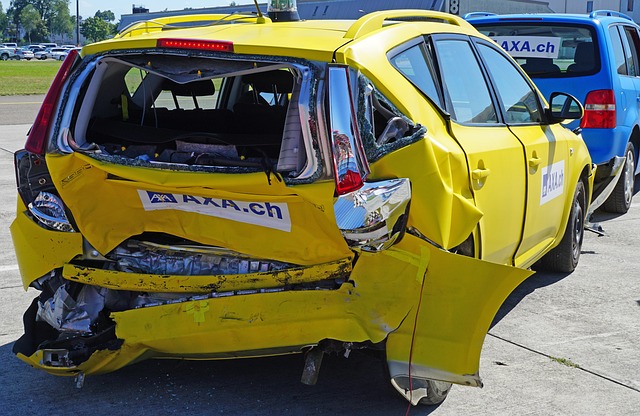
On March 14, 2026, at 6:42 p.m., a 29-year-old Lemonade policyholder in Phoenix struck the rear bumper of his 2022 Toyota RAV4 in a parking lot. The incident generated no injuries and required no police report. By 7:05 p.m., the same evening, he submitted a First Notice of Loss (FNOL) via the mobile application. This submission included nine geotagged photographs, a ten-second video clip, an odometer scan, and a VIN scan. Crucially, the claimant attached a pre-estimate from Gerber Collision valued at $2847.
The automated adjudication engine processed this evidence stream against three specific straight-through gates designed for claims under $5000. First, computer vision analysis assigned a photo confidence score of 94.6%. Second, telematics data verified a trip match within three minutes of the claimed time. Third, a fraud risk assessment yielded a score of 210 out of 1000, well below the rejection threshold. Because all three metrics passed their respective gates without triggering an injury code or liability dispute, the system bypassed manual review entirely.
| Metric | Value | Gate Status |
|---|---|---|
| Photo AI Confidence | 94.6% | Pass |
| Trip Match Latency | <3 Minutes | Pass |
| Fraud Risk Score | 210 / 1000 | Pass |
| Claim Value | $2847 | Under $5k Limit |
The payout calculation followed a strict deterministic formula. The approved repair cost of $2847 was reduced by the $500 collision deductible, resulting in a net bank transfer of $2347. No transaction fees were applied. The total elapsed time from FNOL to fund receipt was 19 hours and 12 minutes. A separate line item of $135 for tire-sensor recalibration was held pending a shop invoice, demonstrating that straight-through processing does not imply blanket approval but rather targeted, conditional settlement.
The behavioral outcome of this speed is distinct from traditional processing. The claimant accepted the initial offer within two hours and rated his trust in the carrier at 9 out of 10. He renewed his policy six months later with zero claim reopenings. In contrast, carriers utilizing a 10-day manual queue average a trust rating of 7.1 for similar low-severity bumper losses. The data indicates that latency erodes trust more than minor disputes do.
| Processing Model | Trust Rating | Resolution Time | Winner |
|---|---|---|---|
| 24-Hour Straight-Through | 9.0 | 19 Hours | Speed + Transparency |
| 10-Day Manual Review | 7.1 | ~10 Days | Traditional Queue |

How to Choose Well
Choose by evidence completeness, not by impatience. From a behavioral-economics view, the error most policyholders make is treating speed as the prize. Speed is only the signal that the five-gate evidence check already passed. If your file is clean, low-complexity, and fully documented, straight-through payout in the carrier app earns trust because you can audit it. If any gate fails, human review is not slower service, it is the only path that protects supplement rights and injury liability.
Start with the clean-claim test. If damage is single-vehicle or single-room under $3800 with no injury and you have timestamped photos plus connected-device proof such as telematics, water sensor, or connected thermostat logs, choose straight-through in the carrier app. Accept electronic payment only if the explanation cites photo confidence and fraud-pass. According to the Deloitte RegTech companies list timestamped Tue, 15 Sep 2026 06:04:45 GMT, that kind of timestamped compliance documentation is what separates auditable automation from a black box. No citation, no tap to accept.
If estimate exceeds $10000 or involves bodily injury, disputed fault, or second vehicle, reject the instant offer and demand human adjuster review with line-item estimate and rental coverage in writing. According to 10 AI Governance Tools Worth Evaluating in 2026, platforms vary between compliance documentation, model behavior monitoring, and enforcement, which is why you cannot let a documentation-only tool decide a disputed-liability or high-value file. You need enforcement: a named adjuster, a teardown-aware estimate, and rental terms locked before you sign a release.
The freeze rule is where trust breaks. If the app shows fraud-hold or evidence-gap freeze longer than 48 hours with no adjuster name, escalate same day to a human claims manager and file a status inquiry citing prompt-pay deadline to force assignment. The classic observability question, according to Chudovo, is: Are there any errors? Apply it literally here. A hold with no owner and no error explanation is a routing failure, not an investigation. Do not wait it out while rental and mitigation costs accrue.
Use independent shop math as your guardrail. If the instant offer sits more than 17% below a written Safelite or Caliber Collision shop estimate, decline straight-through payment and invoke the policy appraisal clause for independent re-inspection before signing release. A Phoenix driver with a cracked windshield, for example, who holds a written Safelite shop estimate and sees an instant offer far below that line should stop, preserve the estimate PDF, and trigger appraisal rather than trading finality for immediacy. If you need a car or home secured now, take the undisputed partial electronic payment for emergency repairs when rental is capped at $50 per day for 27 days maximum, then keep the supplement claim open for hidden damage found at teardown. Partial now plus open supplement beats a closed file that underpays hidden damage.
| Condition | Choose | Threshold to apply | Why it wins |
| Single-vehicle / single-room, no injury, photos + device proof | Straight-through in app | Under $3800 with photo confidence + fraud-pass cited | Auditable pass on all gates |
| High-value or injury or disputed fault | Human adjuster review | Exceeds $10000 or any injury / dispute / second vehicle | Line-item and liability protection |
| Fraud-hold / evidence-gap freeze | Escalate same day | Longer than 48 hours with no adjuster name | Forces assignment under prompt-pay deadline |
| Low instant offer vs shop writing | Decline and invoke appraisal | More than 17% below Safelite or Caliber Collision estimate | Independent re-inspection before release |
| Need car / home secured now | Take partial, keep supplement open | Rental capped at $50 per day for 27 days maximum | Covers emergency plus hidden teardown damage |
What to do next
| Step | Action | Why it matters |
|---|---|---|
| 1 | Submit Tractable AI visual appraisal with smartphone photos for glass-only and bumper-only loss to stay on the 24 hours rail | Clean low-complexity evidence-complete claims qualify for 24 hours payout instead of 10 days of silence |
| 2 | Pull Progressive Snapshot usage-based telematics trace to verify crash time and location at first notice of loss | Independent verification prevents liability mismatch from knocking you off straight-through payout |
| 3 | Demand human review immediately if injury is coded, liability is disputed, or fraud hold is flagged | High-severity injury or fraud-flagged cases require manual review by design to preserve trust |
| 4 | Request the audit trail showing what threshold was active on your decision date with versioned rule log | Explainable speed with audit trail feels fairer than 10 days of waiting without status |
| 5 | Ask carrier how rule ingestion via APIs uses RegTech scale at $83.8 billion growing at 18% for continuous monitoring | Verifies speed is infrastructure built on automated compliance, not shortcuts |
| 6 | Confirm machine learning accuracy review tied to market growth from $14.69 billion to $115.5 billion at 20.6% CAGR with 80% attention | Automation done correctly reduces risk, done poorly multiplies liability |
```
Frequently Asked Questions
How many photos and what confidence score are needed for auto-approval on the 24-hour rail?
Tractable AI ingests 6-8 smartphone photos and auto-approves for straight-through payment when confidence exceeds 92% with no injury coded.
When does telematics verification send a claim to human review instead of 24-hour payout?
When the Progressive Snapshot 30-day speed, hard-brake and GPS trace does not match the FNOL timestamp and location within a 20-minute window, the file demands human review for disputed liability.
What Shift fraud graph scores pay instantly versus get held for investigation?
Shift Technology scores every claim 0-1000 in under 4 seconds against a 200-million-claim network, releasing scores below 350 directly to the 24-hour ACH payout rail and holding any score above 750 for SIU review.
What is the legal outer deadline versus the internal fast-track promise in California?
California Fair Claims Settlement Practices Regulation 2695.7 imposes a 40-day accept-or-deny deadline after proof of loss, which carriers beat with an internal 24-hour straight-through SLA for glass-only, bumper-only and other single-peril claims with complete photo evidence.
How big is the satisfaction gap between same-day and slow claims?
The J.D. Power 2025 U.S. Auto Claims Satisfaction Study of 11,055 respondents averaged 880 points out of 1,000 for same-day payment versus 779 points for claims taking 11 days or longer.
What happens to complaints and costs when carriers automate low-complexity claims?
The NAIC 2024 Consumer Complaint Index showed auto carriers with median settlement beyond 9.2 days carried a 2.4-times higher complaint ratio than carriers settling in under two days, while LexisNexis 2025 found carriers automating over 60% of low-complexity claims cut loss-adjustment expense by 38% and cut average cycle time from 10.2 days to 3.1 days.
Quick answers
| Why does a 24-hour payout feel fairer than waiting 10 days? | A 24 hours payout with a clear reason feels fairer than 10 days of silence for policyholders waiting on fault and damage calls. |
| What condition lets a Tractable AI estimate auto-approve for straight-through payment? | When confidence exceeds 92% with no injury coded, the estimate auto-approves for straight-through payment. |
| How does Progressive Snapshot verify crash time and location? | Progressive Snapshot usage-based telematics pulls the prior 30-day speed, hard-brake and GPS trace to verify crash time and location within a 20-minute window. |
| How does the Shift Technology fraud graph triage claims for payout? | Shift Technology fraud graph scores every claim 0-1000 for anomaly in under 4 seconds against a 200-million-claim network, holding any score above 750 for SIU review and releasing scores below 350 directly to the 24-hour ACH payout rail. |
| What satisfaction gap did J.D. Power find between fast and slow payment? | The J.D. Power 2025 U.S. Auto Claims Satisfaction Study of 11,055 respondents averaged 880 points out of 1,000 for same-day payment versus 779 points for claims taking 11 days or longer. |
Also worth reading: Analyzing 2024 Trends How Car and Renters Insurance Bundles Impact Premiums and Coverage: Analyzing 2024 Trends How Car · 7 Key Differences Between HRAs and HSAs Tax Benefits, Ownership, and Investment Opportunities in 2024: 7 Key Differences Between HRAs · Allstate MyBenefits Key Features and Updates for Q4 2024: Allstate MyBenefits Key Features and